
I was seven years old when I first understood that history was not something that happened to other people–and this made me a writer.
We were living in France at the time, my family and I — one of those childhood years that most American children don’t get to have, the kind that leaves a permanent mark. I remember standing in a room that had once been occupied, centuries before, by people whose names and fears and ordinary lives were entirely real. No exhibit placard made them real. The room itself did.
That feeling never left me. And it is the reason I write.
Growing Up Inside History
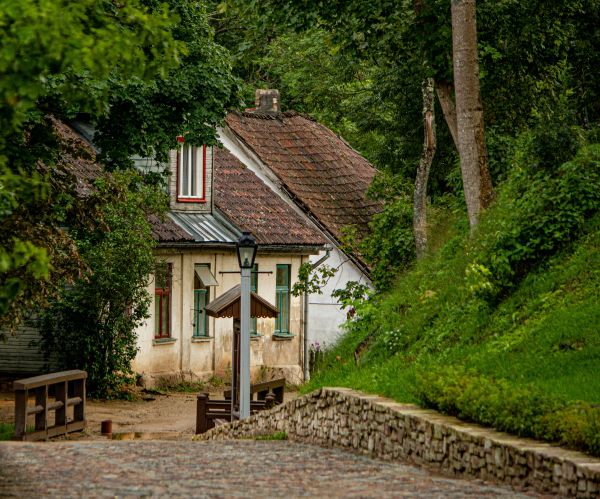
My childhood moved between Europe and the United States in a way that might sound glamorous from the outside, but what I remember most isn’t glamour — it’s texture. The particular smell of old stone in English churches. The way a market square in a French village feels like it’s been exhaling the same breath since the thirteenth century. The hush of a room where something important once happened, long before anyone thought to put a brass plaque on the door.
I grew up in museums and historical sites and cathedrals, yes — but I also grew up in grocery stores and school hallways and ordinary afternoons in places where the past wasn’t a field trip, it was the neighborhood. That does something to a child. It makes history feel personal rather than academic. It makes the people who came before feel reachable, not remote.
Both my father and mother were readers, and my family was the kind that paused in front of paintings to wonder about the subject rather than move on to the next gallery. History, for us, was not a subject. It was a way of paying attention.
How France Made Me a Writer
France gave me my first real understanding of what it means for a place to hold a story. Every French town I visited — even the smallest — had a square, a church, a sense that generations had stood in the same spot and looked at the same view and worried about the same kinds of things people have always worried about. Whether the harvest would come in. Whether the letter would arrive. Whether the person they loved was safe.
That’s the heartbeat of historical fiction: the universal fears and hopes dressed in the clothing of a particular time and place. France taught me how to listen for that heartbeat.
I also learned, living there, that elegance and hardship are not opposites. A beautiful country carries its scars. And the scars are where the most interesting stories live.
How England Made Me a Writer
England gave me language in a new key. Growing up reading English literature while surrounded by English landscape — the gray light, the layered green of the countryside, the particular weight that old brick buildings carry — made prose feel like something that belonged to a place as much as to a person.
It also gave me Mary Stewart, whose novels I read and re-read as a child and young woman, and whose ability to weave mystery and romance and a deep sense of place into historical fiction shaped what I eventually understood a novel could do. I have been compared to her since Call of the Blackbird was published, and I take that as the finest compliment I can imagine.
England taught me that setting is not backdrop. Setting is character. The land holds memory, and a writer’s job is to listen carefully enough to hear it.
Returning as an Adult
When I traveled back to Europe as an adult — with a writer’s notebook and a researcher’s eye rather than a child’s open wonder — I found that the wonder had never actually left. It had just grown more specific.
I found myself standing in the same kinds of rooms I had stood in as a child, but now I was asking different questions. Not just “who lived here?” but “what did they want, and what stood in their way?” Not just “what happened?” but “what did it feel like in the body, in the morning, not knowing how it would end?”
Those are the questions a novelist asks. And the places I had loved since childhood had never stopped offering answers.
Research trips to Europe — to archives, to landscapes, to the kinds of sites that don’t appear in tourist guides but are exactly where the truth of a story lives — became a form of devotion for me. I go back not just to gather material but to remember what it feels like to be inside history rather than looking at it from a distance.
How This Shapes the Page
When I sit down to write, I am drawing on decades of accumulated place-memory. The light in a particular country at a particular hour. The feeling of a cobblestone street underfoot. The smell of salt air near an English harbor. These things are not decorative details in my fiction — they are the connective tissue that makes a historical world feel real enough to inhabit.
Call of the Blackbird is set in a world I have, in many ways, been preparing to write since I was seven years old. The historical accuracy matters deeply to me — I am a meticulous researcher and I will not get the facts wrong. But accuracy alone doesn’t bring a world to life. What brings it to life is the memory of having stood in rooms like those rooms, walked in streets like those streets, and felt, even for a moment, what it might have felt like to be a person in that time and place.
That is the gift travel gives a writer. Not just material, but a kind of emotional truth that can’t be looked up in an archive.
An Invitation to the Past
If you have ever stood in a room in an old country and felt the weight of it — the sense that you were sharing space with everyone who had stood there before you — then you already understand what drives my writing.
History is alive. It’s waiting in stone and paper and the photographs of people whose names we’re still learning. I write to help bring those names back into the light.
If you’d like to join me there, I’d love for you to pick up a copy of Call of the Blackbird — available in paperback, Kindle, and audiobook.
With love for the past, Nancy