
A NOVEL BY NANCY POLK HALL
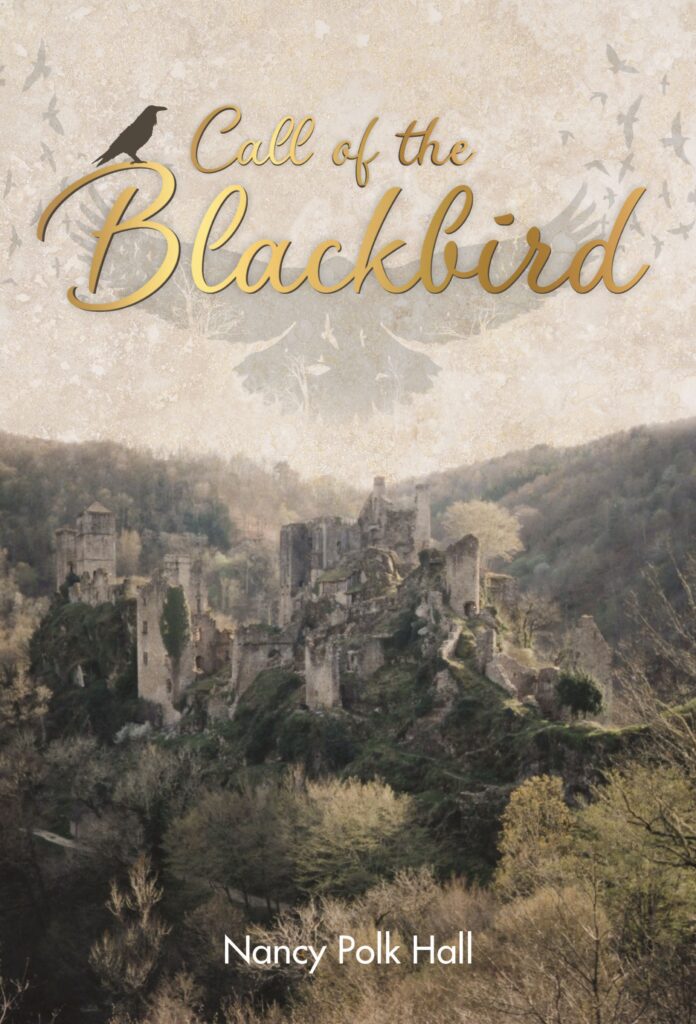
Call of the Blackbird
A stolen boy. A hidden treasure. A château where the war never truly ended.
Available now in paperback, ebook, and audiobook.
The Story
Caroline Mitchell came to France for a quiet holiday. She left carrying secrets that could get them both killed.
When the young boy in her care vanishes from the battlefields of Verdun, Caroline finds herself pulled into a web of wartime betrayal, stolen art, and a family reckoning decades in the making. At the center of it all is Château de Merle — a crumbling, beautiful fortress in the Auvergne that hid something during the German Occupation. Something people are still willing to kill for.
With a kidnapper she can’t identify, a man she’s beginning to trust but isn’t sure she should, and a missing child whose life depends on how fast she can think — Caroline has no choice but to go deeper into the margins of a history the world thought was settled.
Call of the Blackbird is an immersive mystery of wartime secrets, hidden art, and the particular courage of ordinary people caught in extraordinary circumstances. Written in the intimate first-person tradition of Mary Stewart and Daphne du Maurier, it is the kind of novel that stays with you long after the last page.
Excerpts
We headed for Nancy. I huddled down in the seat, and misery engulfed me. Soon we passed by the statue of the wounded lion at the turn. The poignancy of the statue and the horror of the last hour overcame me, and I started to weep silently.
Paul looked straight ahead as he drove and paid no attention to me as if I were not there. Digging in my purse for my handkerchief seemed to break the silence, and then Paul began to speak slowly and softly.
“You feel like I am deserting my son by leaving, don’t you? Well, I am not. Jacques is not here, and the best thing we can do is leave and get started on getting him back.” – A Father’s Dilema
“This place has become the obsession of my old age… They no longer charge me admission, possibly because they think I belong here as I am an old ruin myself.” – The Old Scholar’s Obsession
DAR History Award
Call of the Blackbird was honored by the Daughters of the American Revolution, George Washington Chapter for excellence in historical fiction.
BEHIND THE BOOK
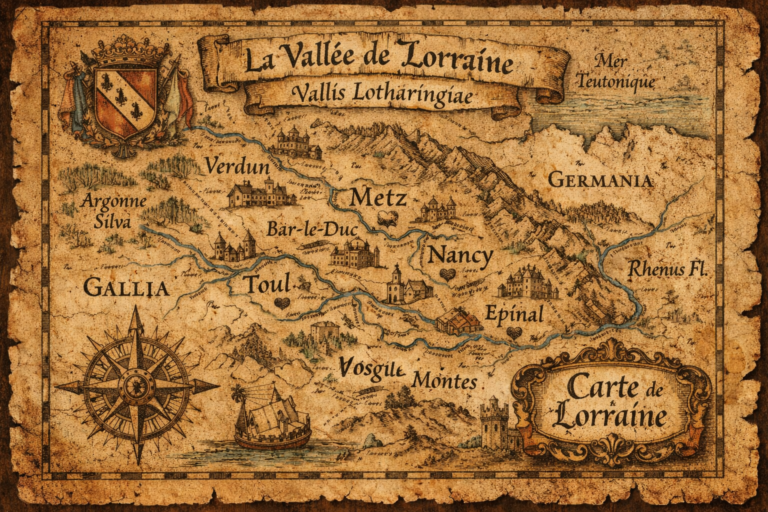
What the Maps Don't Show
I have walked the ground where this story happens.
When I was eight years old, my family moved to France — Christmas Eve in a cold, small apartment in a Europe still scarred from the war. I grew up between cultures, between languages, between the France that tourists see and the France that history left behind. The châteaux I write about are not imagined. The fog on those mountain roads, the particular silence of a Lorraine battlefield, the way a French village closes itself around its secrets — these are things I know in my bones.
Call of the Blackbird began with a question I couldn’t stop asking: what happened to the art, the jewelry, the carefully inventoried possessions that Jewish families entrusted to strangers before the war consumed them? The historical record confirms that enormous quantities of this property were hidden by sympathizers and never recovered. I wanted to know what it felt like to be the person who knew where it was — and the person who came looking decades later.
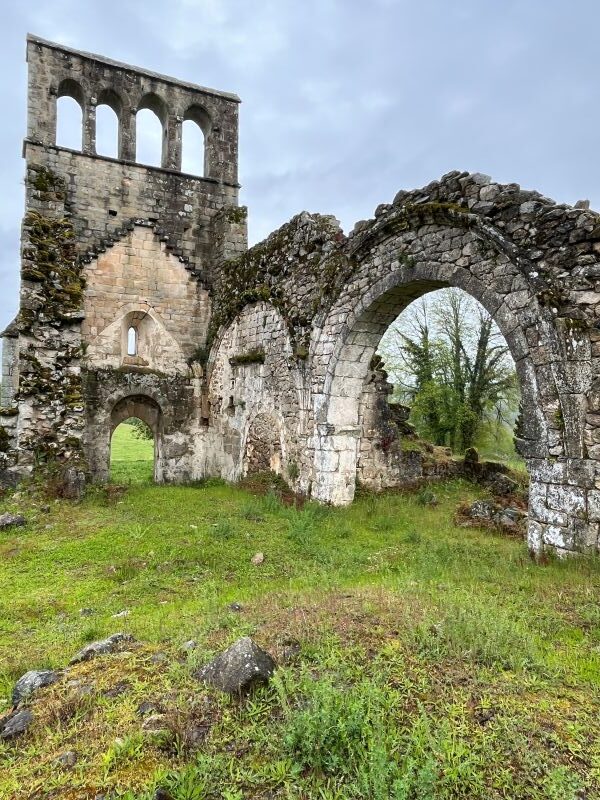
The Château de Merle is based on the ancient fortress of the Tours de Merle in the Corrèze — a real, ruined medieval stronghold in one of the most remote and beautiful valleys in France. I have stood on those stones. I have looked down at that river. And I have asked myself what it would take to hide a secret there for thirty years and whether a secret like that ever truly stays buried.
The answer became this book.
LOCATION
Les Tours de Merle
A feudal fortress city in the Corrèze, France — treated as a living character throughout the novel.
A FEUDAL CITY REVEALED
"The first impression I had was of the sheer vastness of the place. It was more like a feudal city than an old, ruined chateau... The fortress rose on its own perch in the center of the bowl, high above the river... I squinted and tried to imagine what this city fortress looked like five hundred years ago and was almost successful."
REVIVING THE SLEEPING FORTRESS
"The Tours de Merle will come alive again... It has been sleeping…" "Like in 'The Sleeping Beauty,'" Francoise interjected. "The old castle covered with vines and thorns. Paul is waking it up."
LANDSCAPE OF MAJESTY AND DANGER
"The river curled below me some two hundred feet straight down, while on my right a natural rock wall rose some fifty feet... part of the majestic quality of the buildings was that the crag in the half circle of the river had two separate domes of rock."
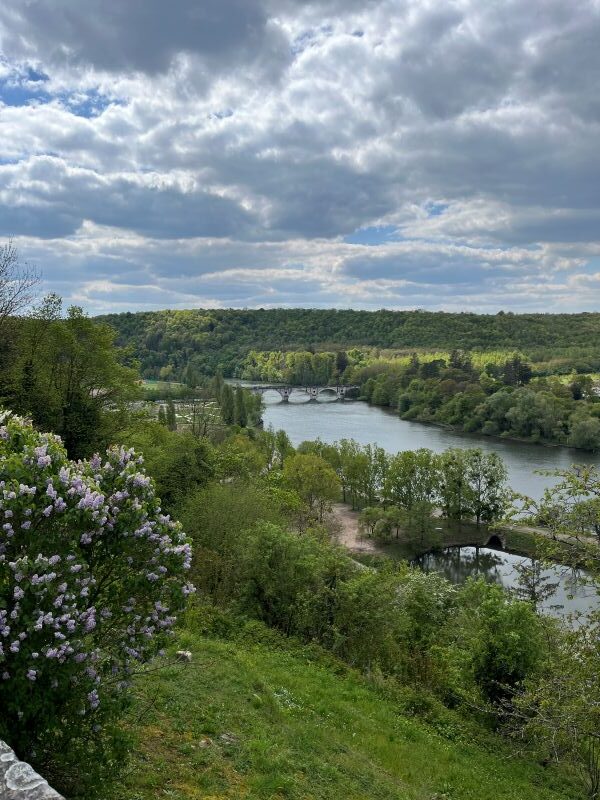
Lorraine, France
The perfect setting for Call of the Blackbird — the magic Nancy Polk Hall weaves through her stories
PANORAMIC VIEW FROM THE HILLTOP
"The Moselle River lazed through the valley it had created over thousands of years. Sculpted and scoured by its waters, the hill on which I was sitting showed a fantastic view of the countryside of Lorraine."
POST-WAR HISTORICAL CONTRAST
"...the countryside still bore the scars of two world wars... The bullet holes had been filled and smoothed over; only a memorial dotted here and there in the villages, giving clues of the fought-over land."
POST-WAR HISTORICAL CONTRAST
"The opera house was a little jewel, baroque and beautiful… As the Mercedes pulled into the Place Stanislas, the beauty of it overwhelmed me for the hundredth time… Lanterns and fountains with intricate ironwork and gold-gilded grille work by Jean Lamour embellished the corners of the square."
Reading Group Guide
ABOUT THE BOOK
Call of the Blackbird follows American Caroline Mitchell as she travels in France and becomes entangled in a decades-old mystery involving stolen Jewish art, wartime collaboration, and a kidnapped boy. Set against the real landscapes of Lorraine, the Auvergne, and the ruins of the Tours de Merle, the novel explores questions of loyalty, guilt, identity, and what it means to reckon honestly with the past.
A NOTE FOR BOOK CLUBS
Nancy Polk Hall is available for virtual book club visits. If your group is reading Call of the Blackbird, reach out through the [Contact] page to arrange a conversation with the author.
DISCUSSION QUESTIONS
Caroline is an outsider — an American woman traveling alone in France. How does her outsider status both limit and free her in ways a French character could not be? What does she see that a local might miss?
Paul de Merle carries a lifelong uncertainty about whether his father was a collaborator or a hero. How does that unresolved question shape him? Have you ever had to live with ambiguity about someone you loved?
The stolen art in the novel belonged to Jewish families who entrusted it to a stranger for safekeeping. What does the novel suggest about the difference between safekeeping and ownership? Who does the treasure ultimately belong to?
Caroline makes a decision on the train to Paris that puts Paul’s trust at risk. Was she right? What would you have done?
Claus Reiker is introduced as a charming, helpful stranger. Looking back, what signs did you miss — or notice — along the way?
Jacques, a child, demonstrates remarkable courage throughout the novel. What does the book suggest about how children experience danger differently from adults?
The château itself functions almost as a character. How does Nancy Polk Hall use setting to create atmosphere and tension? Were there moments where the place felt like it was working against the characters?
Nancy Polk Hall has said that her characters emerge organically — that she discovered things about Caroline that she hadn’t consciously planned. As a reader, did you feel that authenticity? Which character felt most alive to you?
The novel ends with Caroline making a choice about her future. Was it the right one? Did the ending feel earned?
Call of the Blackbird is set in the 1980s, decades after WWII — yet the war is everywhere. Why does Nancy Polk Hall set the story at this particular remove from the conflict rather than during it?
READY TO READ?
Experience the Full Story
These passages are only a glimpse. The full novel is available in paperback, digital, and audiobook.