
When I was a girl, England wasn’t a research destination. It was simply home.
Not permanently — we moved, as military families do — but long enough for it to leave its mark in the way that only childhood places can. Long enough for me to understand, from the inside, the particular texture of English country life in the 1960s. The way a stone wall feels when you run your hand along it on the way to school. The smell of a drawing room in autumn, coal smoke and old paper and something older still that the house had absorbed over the centuries. The sound of a village going about its business on a Tuesday morning in November, as though nothing in the world had changed since before the war, and nothing was likely to.
I didn’t know, then, that I was storing all of it away.
History in the Walls
England in the 1960s had a quality that I’ve never quite been able to name. It was a country still living in two times at once. On the surface: change. Television arriving in parlors, new voices on the radio, young people in the cities pushing at every edge. And underneath: something older and more stubborn, a sense that the world had a correct order, that the village and the country house and the church on the green had always been there and always would be, and that the proper response to disruption was a kind of quiet, dignified endurance.
It was a world of extraordinary surfaces. Of things left unsaid not because they didn’t matter, but because saying them would have been a kind of trespass. Of households where the past was present in every room — in the photograph on the mantle, the silver laid out for Sunday, the name on the village war memorial that matched the name of the man pouring tea.
I loved it without understanding it. Children often love the things that will shape them long before they know they’re being shaped.
The Story That Came From It
Death at Brookhaven is set in that world.
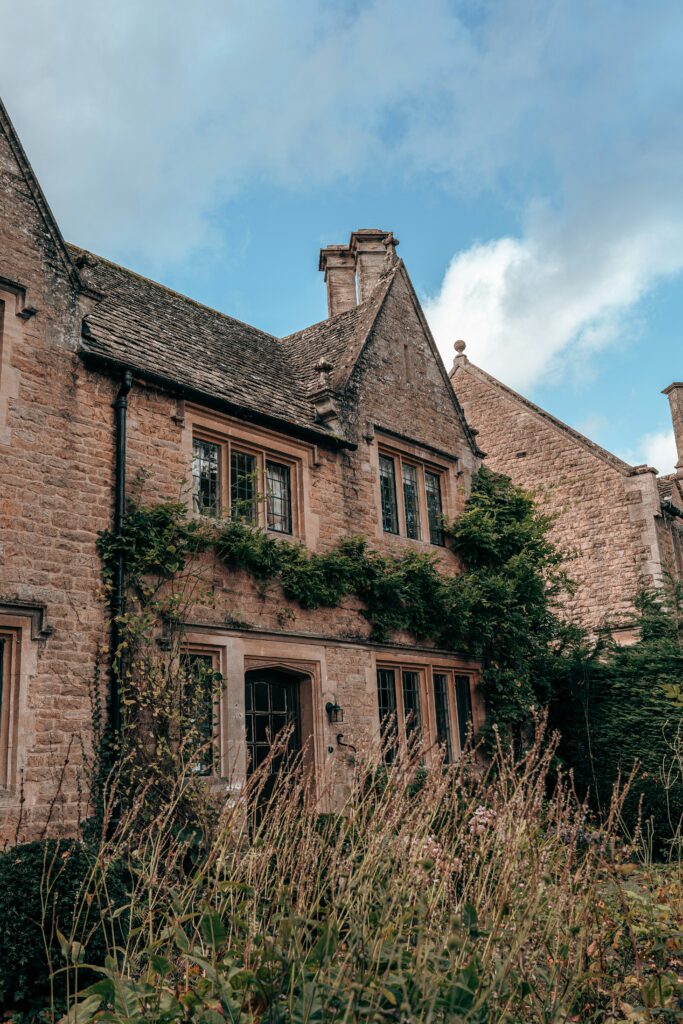
It takes place in 1960, in an English country house that carries its history the way those houses do — visibly, and with weight. There’s a household in the process of change, an outsider arriving into a world with its own unwritten rules, and a mystery that turns on the things that happen when old certainties begin to crack.
I couldn’t have written it from research alone. I’ve done the research — read the letters, spent time in the archives, revisited the places — but what the book knows in its bones, it knows from childhood. The way authority sounded in that world. The way a room could tell you exactly where you stood. The way silence was its own kind of language.
When I write a scene set in the entrance hall of Brookhaven House, I’m not imagining. I’m remembering — or something close enough to remembering that the difference hardly matters. The details that make historical fiction feel true rather than costumed are rarely the ones you find in books. They’re the ones you carry in your body, laid down so early you’ve stopped noticing them.
What’s Coming
The book is nearly ready. After the Atlantic crossing where I revised it, after coming home from the Continent with new clarity about what it means to write about England from the outside looking back — I can feel it settling into its final shape.
I’ll be sharing the cover in July. I can’t say more than that yet, except that it captures something of what I’ve been trying to describe here — that feeling of a world with history in every surface, and a story beginning to move beneath it.
If you’d like to be among the first to see it — and to receive news about the book before it goes out to the wider world — I’d love to have you in the Readers’ Circle. It’s a small, informal group of readers who hear things first: early chapters, cover news, behind-the-scenes research notes, and eventually an invitation to receive an advance copy in exchange for an honest review on launch day.
It costs nothing. It simply means you love books, and you want to be part of this one from the beginning.
You can join here: Readers’ Circle
I’m so glad you’re here for this.
With love for the past — and for what’s just around the corner,
Nancy