
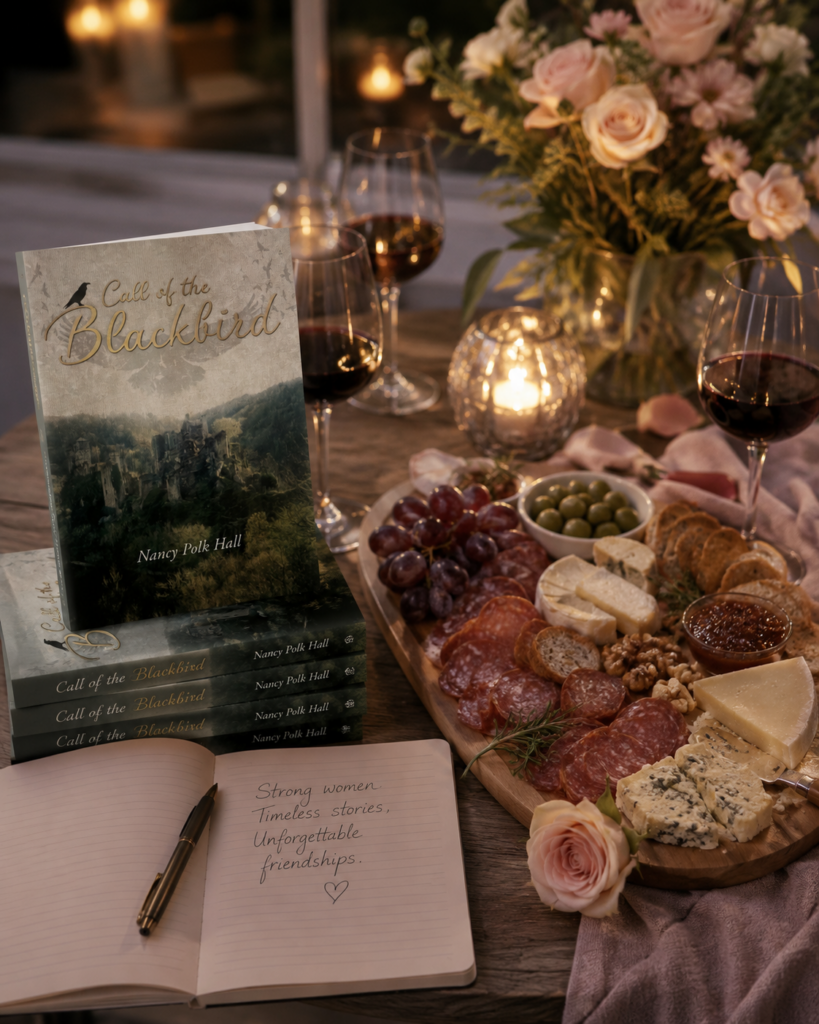
There’s a particular kind of silence that happens at a book club table — the kind just before someone says something true.
I’ve been in book clubs that never found that silence. We talked about the plot, about who we liked and who we didn’t, about whether we’d recommend it. And then we moved on to the wine and the cheese and the other things in our lives. I’ve been in book clubs where that silence happened in the first twenty minutes and didn’t leave for two hours.
The difference, I’ve come to believe, is entirely in the book.
What a Book Club Book Actually Does
The novels that generate the richest conversations share a quality that’s difficult to name but instantly recognizable: they don’t resolve what they raise.
I don’t mean they have ambiguous endings — though they sometimes do. I mean they ask questions the reader carries out of the book and into the room. Questions about loyalty, about what people do under pressure, about how much history shapes a person who never knew it happened. These questions don’t have answers. They have perspectives. And a room full of thoughtful people, each bringing their own perspective, is exactly the right place for them.
This is, in many ways, what historical fiction does best.
Why History Gives a Book Club More to Work With
When a story is set in the present, readers bring their own assumptions to every page. The world the characters inhabit is, more or less, a world the reader recognizes. They know how it works. They evaluate characters against their own experience. The conversation stays close to the surface.
Historical fiction changes that equation. The world of the story is partly foreign — the rules are different, the constraints are different, the choices available to characters are radically different from what a modern reader would have. And that distance creates a peculiar kind of freedom.
Book club members who would never argue about what they would do in a contemporary scenario will lean forward over an 1860s dining table or a 1940s wartime parlor and say, with real conviction: I would never have done that. I would have left. I would have stayed. I would have told the truth.
And then someone else says: No you wouldn’t. Not then. Not with what she stood to lose.
The argument that follows is never really about the character in the book. It’s about the reader — about what she believes, what she values, what she fears. The historical setting is what makes it safe to have that conversation. The distance of time is what opens the door.
The Three Questions That Separate Good Book Club Books From Great Ones
Over years of reading and conversation, I’ve found that the books which generate the deepest discussions tend to answer yes to three questions.
Does the book ask what you would have done? Not in a trivial sense — not “would you have taken the shortcut?” but in a way that reaches toward something essential. Would you have protected someone you loved at the cost of someone you didn’t know? Would you have spoken up when speaking up meant real risk?
Does the book contain at least one character the group can’t agree on? The character is not simply good or simply bad. She is understandable in ways that make her choices uncomfortable to understand. Someone in the group will defend her. Someone won’t. Neither of them will be entirely wrong. That tension — between seeing someone clearly and judging them fairly — is where book clubs come alive.
Does the book leave something genuinely unresolved? Not a loose plot thread, but a moral question that doesn’t have a tidy answer. The story resolves. The question doesn’t. And the question follows everyone home.
On Call of the Blackbird in a Book Club Context
I’ll say this plainly, since it’s something I think about: Call of the Blackbird was built around questions I couldn’t answer.
The research took me into corners of post WWII France that were complicated — where the choices people made were shaped by forces they couldn’t see clearly, and where the people who did see clearly were often the ones with the most to lose. I wanted to write a story where the reader finishes the last page and immediately wants to tell someone what she thinks. Not what happened, but what she thinks about what happened.
Whether a character did the right thing. Whether the right thing was even available. Whether knowing the truth about the past changes anything about how you live now.
Those are book club questions. They were always meant to be.
If your group is looking for something to read this summer — something that will give you that particular silence before someone says something true — I’d be honored if it were mine.
I’m also happy to join groups virtually for a conversation. It’s one of my favorite things.
One Last Thought
The best book club discussions I’ve ever been in were not really about the book at all. They were about what the book had unlocked. About memory and history and the particular weight of stories that feel personal even when they aren’t.
That is what the best historical fiction does — it makes the reader feel, somewhere in her chest, that this past belongs to her. That she has a claim on these people and their choices, even though she never lived in their world.
I believe that feeling is the beginning of empathy. And empathy, it turns out, makes for excellent book clubs.
Call of the Blackbird is available in paperback, Kindle, and audiobook. Book club discussion guides and virtual visit requests: Contact Me