
I don’t speak Portuguese.
I know a handful of words — enough to order a coke, to thank someone, to apologize for being in the way on a narrow sidewalk. But standing in the middle of the Lisbon Book Fair this week, surrounded by thousands of people and tens of thousands of books, I found myself understanding something I hadn’t expected to understand at all.
Books have their own language. And it turns out everyone here speaks it.
What a Book Fair Feels Like from the Inside
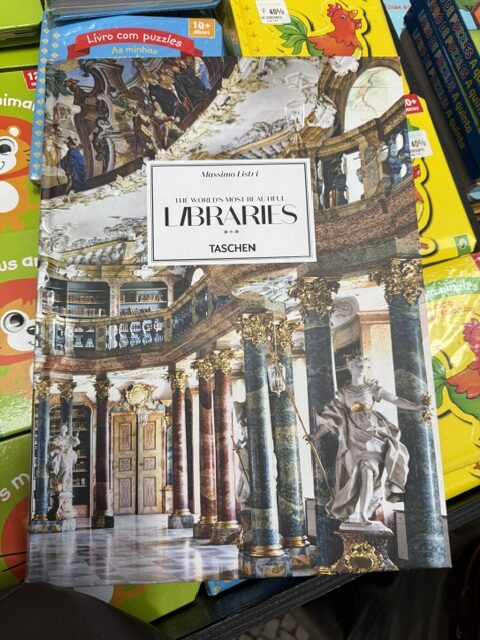
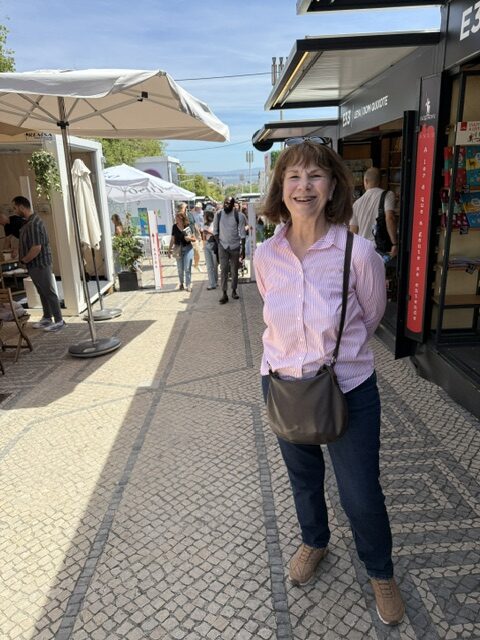
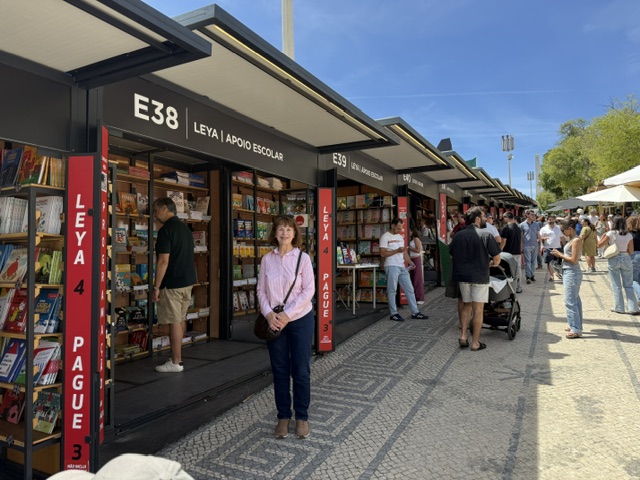
The Lisbon Book Fair is held in the Parque Eduardo VII, a long green sweep of park that runs uphill from the Pombal roundabout toward the edge of the city. The pavilions stretch in rows, each one packed with publishers, booksellers, authors, and readers. Children carry stacks of picture books. Couples browse together, one of them pointing, the other nodding. An elderly man sits alone on a bench, completely absorbed in the first pages of something he just bought.
I’ve been to book events before. I know what they feel like from the author’s side of the table — the hopefulness, the slight vulnerability, the way you watch someone pick up your book and try to read their face without being obvious about it. But this is different. This is enormous. And I am not the center of it.
That turns out to be its own kind of wonderful
The Thing About Being Among Other Authors
There is a particular ease that comes from being in a room full of people who understand why you do what you do.
I’ve been introduced to authors here who write in Portuguese, in Spanish, in languages I couldn’t even name with confidence. We don’t share words, not really. But we share something else — the slight exhaustion behind the eyes that comes from late nights with a manuscript, the way a conversation about character motivation becomes immediate and serious within thirty seconds, the instinct to ask “what are you working on?” before almost anything else.
One woman — a novelist from Lisbon whose work I was shown in translation — grabbed my arm when she found out I write historical fiction and launched into what I can only describe as an impassioned monologue about research. She pulled out her phone and showed me photographs: old maps, archive documents, a letter in faded ink. I showed her mine. We spent twenty minutes like that, two people who could not have a conventional conversation, having a very good one.
That’s what writing does, I think. It makes people fluent in each other.
On Inspiration and What It Actually Is
People ask writers about inspiration as though it arrives cleanly, like a package at the door. In my experience it doesn’t work that way. It accumulates. It layers. It requires a certain quality of attention over time.
Being here accumulates something.
Walking through these pavilions, I feel the weight of stories — not just the ones on the tables, but the ones that made the people who wrote them. Every author here carries a particular history, a particular obsession, a particular question they cannot stop asking. That’s what a book is, really. It’s a question that became too large to carry alone.
Lisbon itself is a city built on questions. On voyages that went out and didn’t always come back. On tiles that record what the people who lived here most wanted to remember. There is something about being in this city, at this fair, surrounded by this particular kind of human enterprise — the making and selling and reading of stories — that makes me want to go back to my hotel room and write.
Which is, I suppose, the definition of inspiration after all.
What Transcends the Language Barrier
I’ve been thinking about this all week: what is it, exactly, that crosses the divide when words can’t?
Part of it is the book itself as an object. There is something about the way a person holds a book — the way they turn it over, read the back, open it to the first page — that is identical in every language. The gesture means the same thing everywhere: I am considering whether this story is for me. I know that gesture. I’ve watched it for years. I don’t need a translation.
Part of it is the shared understanding of what we are all doing here. Readers come to book fairs because they believe, on some level, that a book can change something — the way they see a place, a period, a person, themselves. Authors come because they believe the same thing about the books they wrote. That belief is not linguistic. It’s closer to faith.
And part of it — this is the part that caught me off guard — is the simple fact of being seen by someone who recognizes what you are. Another writer looks at you differently than anyone else does. There’s a recognition in it, a kind of respect that doesn’t require words to be exchanged. We are all here for the same reason. We all know what it cost to make the thing we’re holding.
I think about the readers who will eventually hold Call of the Blackbird and not know what it cost. That’s as it should be. But being here, among people who do know, is its own particular gift.
What I’m Taking Home
I came to Lisbon as part of a longer research journey through Europe. I leave with more than I expected.
I leave with photographs of tiles and rivers and old stone archways that will find their way into sentences eventually. I leave with a new understanding of what it means to make something and offer it to strangers. I leave with the image of that novelist with her photographs of old maps, her eyes bright with something I recognized completely.
And I leave with the renewed conviction that stories — the ones we write, the ones we read, the ones we carry in our bones from the places we’ve lived and the people we’ve loved — are the oldest language we have. They were the first thing we made. They will be the last thing we lose.
Call of the Blackbird is available in paperback, Kindle, and audiobook wherever books are sold.